

How MPI Thermal Helps Leading AI Infrastructure Providers Break the Barriers to Hyperscale

AI hyperscalers are no longer just fighting over GPUs—they’re colliding with real‑world limits on energy, water and infrastructure. A single AI‑optimized data center can draw as much electricity as 100,000 homes, with sector‑wide demand in the U.S. projected to grow from roughly 4–5% of national consumption to potentially double‑digit percentages in just a few years. That power ultimately turns into heat, forcing operators into a delicate trade‑off between air, liquid and evaporative cooling architectures that each shift the burden between electricity use, water consumption and cost. At the same time, many new campuses are being sited in regions already facing water stress, where a single facility can require hundreds of thousands to millions of gallons per day for cooling and power generation, putting operators under intense scrutiny from regulators and local communities.
Those macro constraints ripple all the way down into the interconnect fabric that moves data between tens of thousands of GPUs, CPUs and storage nodes. To keep AI clusters fed, hyperscalers are pushing dense optical fabrics built on 400G, 800G and 1.6T pluggable transceivers, co‑packaged optics and silicon photonics—while still being boxed in by strict power, thermal and reliability envelopes. Every optical module now has to deliver higher throughput per watt, tolerate harsher and more dynamic thermal environments, and still meet tight link budgets over the full operating temperature range, which raises the bar dramatically for design validation, thermal tuning and production test.
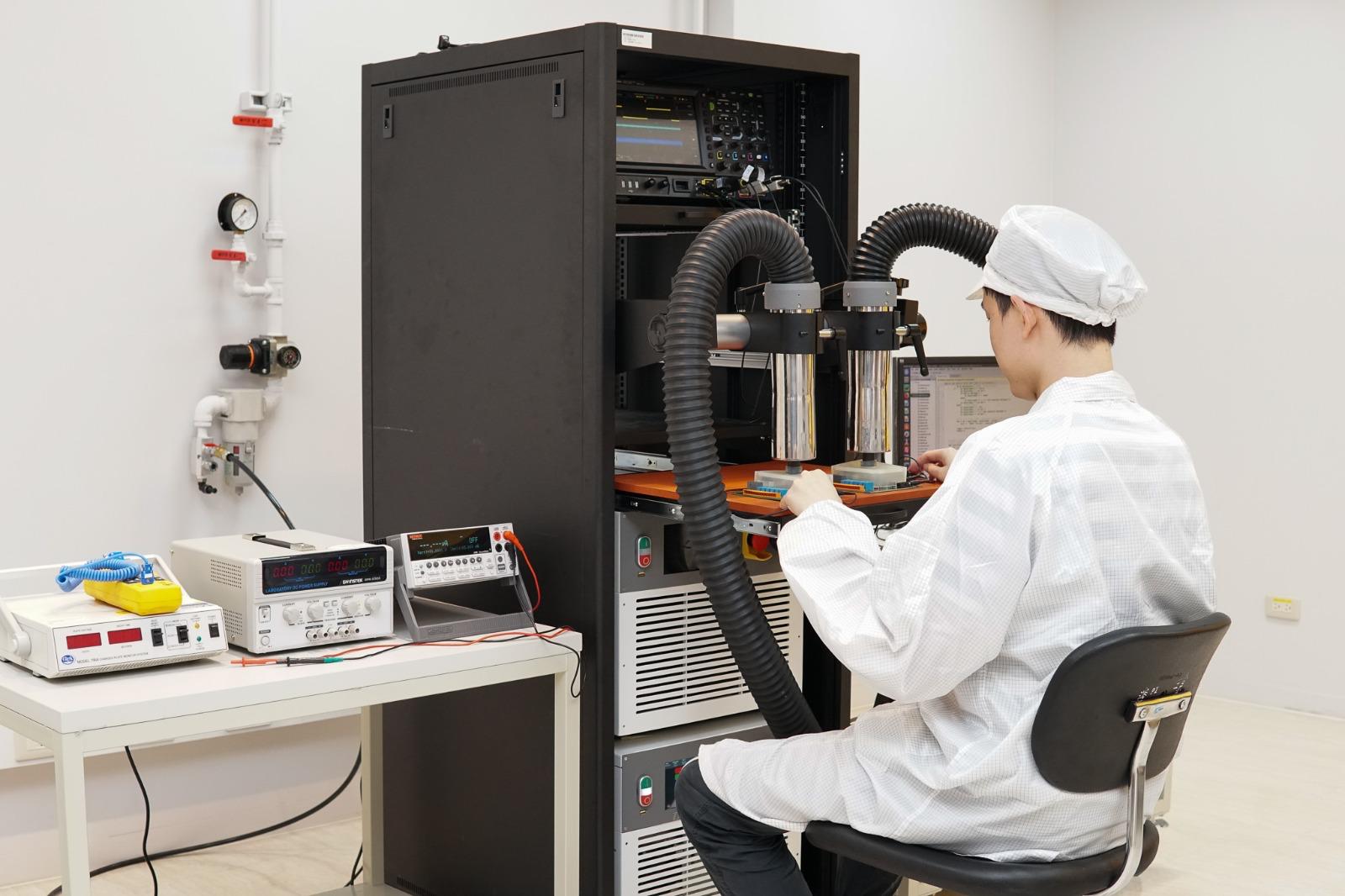
What Engineers Mean by “Thermal Tuning” in Optical Transceivers
In the optics world, thermal tuning is calibrating the transceiver so it holds optical and electrical performance at cold, ambient, and hot conditions—and then storing those calibration values so the module can compensate for temperature drift in the field.
As line rates climb and margins shrink, temperature effects that used to be manageable become dominant. Laser behavior, modulator characteristics, receiver thresholds, and DSP operating points all move with temperature. If you’re building 400G at scale, you already live in this world. If you’re pushing 800G and 1.6T, you’re living there with far less margin—and with higher module power densities that create steeper gradients inside the package.
Thermal Tuning as a Design and Production Constraint for Hyperscale Optics
When hyperscalers move to denser optical fabrics—400G as the floor, 800G as the workhorse, and 1.6T on the near horizon—the transceiver stops being a plug-in commodity and becomes a tightly constrained electro-optical system that has to behave predictably inside a very narrow margin.
That margin is not only defined by bandwidth and link budget. It’s defined by temperature.
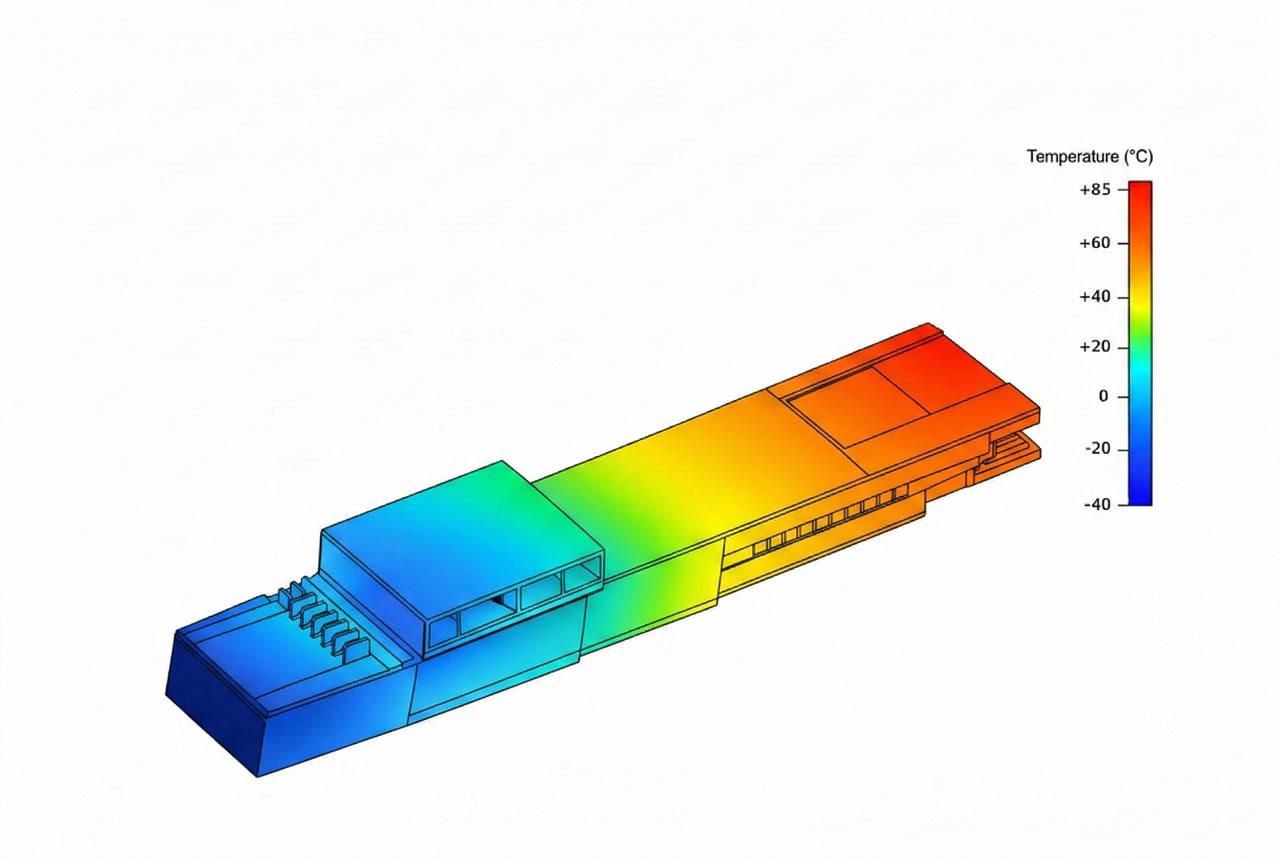
At higher lane rates and tighter power envelopes, the physics become unforgiving: laser output and wavelength shift with temperature, driver and modulator behavior drift, receiver gain and decision thresholds move, and DSP operating points that looked “safe” at room can narrow at cold or hot. As a result, the same module that passes comfortably at ambient can wander out of spec when its case temperature shifts—especially in high-density cages where local heating and airflow effects create gradients across the module body.
This is why you hear engineers refer to thermal tuning as a distinct, production-critical activity. In transceiver manufacturing and validation, thermal tuning is the process of adjusting and calibrating the module’s control settings at multiple temperature points so performance stays within spec across the full operating range.
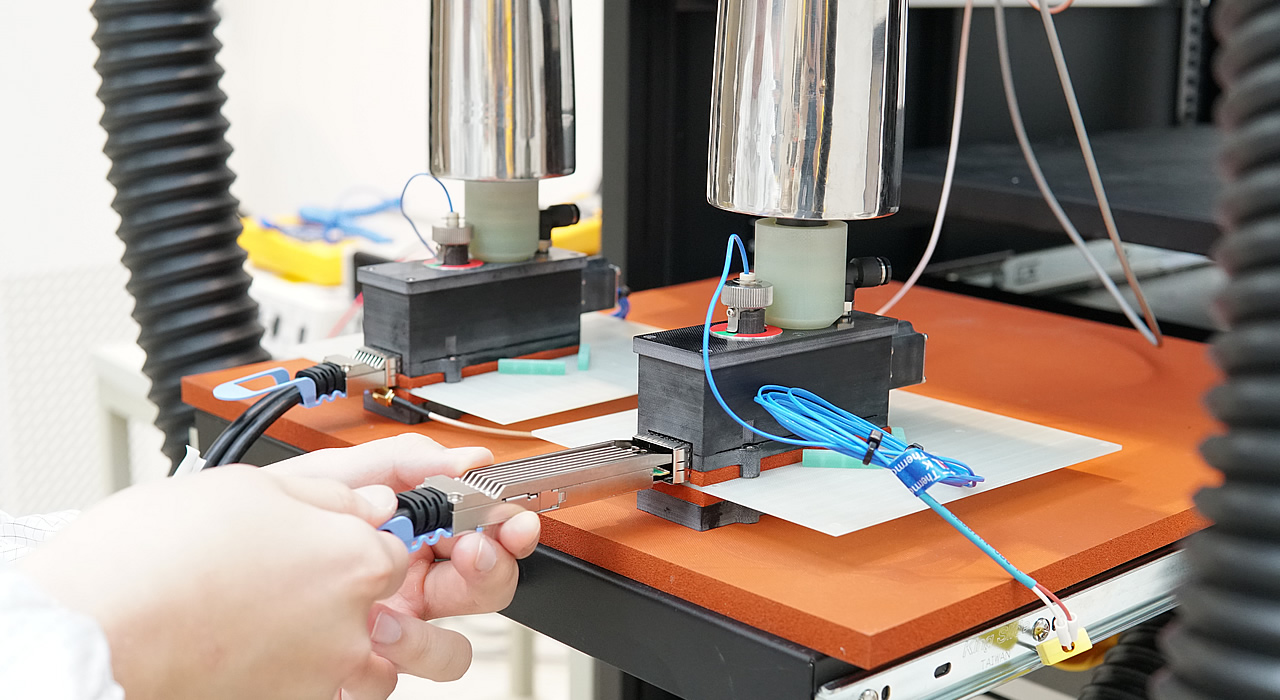
Thermal tuning typically happens in a tight feedback loop. Initial settings are written—think laser bias, modulation drive, equalization and related control parameters—then key performance metrics are measured. If the measurement lands short of target, settings are adjusted and measured again until the module converges.
For modern PAM4 optics, that loop often centers on measurements such as transmitter quality metrics because they correlate directly to real-world link robustness. As lane counts increase and per-lane rates climb, this tuning loop becomes more sensitive to temperature—and it also becomes more time-consuming if temperature transitions are slow or inconsistent.
That’s where test flow breaks down in practice: you’re not tuning a single knob at a single temperature. You’re tuning a set of interacting parameters across cold, ambient, and hot conditions, while ensuring the device is actually at the intended temperature at the point of measurement.
Hot and Cold Temperature Forcing are Both Necessary
A common misconception is that thermal tuning is primarily a “hot” problem because power density rises at speed. In reality, cold conditions matter just as much—and sometimes expose different instabilities.
At cold setpoints, certain behaviors can shift enough to change margins in unexpected ways: thresholds and timing can move, temperature sensors may respond differently to airflow and gradients, and condensation/frost risks increase if moisture management isn’t handled correctly. At hot corners, the system has to hold performance while internal temperatures climb and drift accelerates.
The point is simple: to ship optics that stay stable in service, tuning and verification have to include both cold and hot—and they have to be repeatable.

Temperature Characterization: The Key Requirement Behind Good Tuning
The best tuning algorithm in the world can be undermined by one practical issue: if you don’t control and know the DUT temperature, you don’t really know what you tuned.
Transceivers are small, thermally complex packages. The “air temperature” in the environment and the “case temperature” of the module can be different. The case temperature and the internal hot spot can be different. And once you add a heatsink, cage, fixture, or different airflow pattern, the thermal reality changes again.
That’s why transceiver teams spend time on temperature characterization alongside tuning—confirming stabilization, identifying gradients, and making sure the test condition matches what the module will experience in real assemblies.
Why Temperature Forcing Systems Matter in this Workflow
In transceiver tuning and validation, the limiting factor is often not measurement hardware—it’s how fast and how accurately you can establish and hold the DUT temperature.
This is where directed temperature forcing systems are used as an enabling tool. Instead of waiting for a large volume to stabilize, temperature is applied locally at the device, so the module can be brought to setpoint quickly and held tightly while measurements are taken and tuning loops are executed.
In practical terms, faster stabilization means:
-
more temperature points per unit without crushing throughput
-
tighter correlation between the tuning condition and the verification condition
-
less time lost between iterations in the tuning loop
And for high-volume manufacturing, it means you can scale thermal tuning without turning temperature transitions into the pacing item.
Adapting to Diverse Testing Needs with Flexibility & Reusability
MPI Thermal’s advanced temperature cycling systems are engineered to provide exceptional flexibility, allowing seamless adaptation to devices and components of various shapes and sizes. Selecting the right system is critical for optimizing your thermal testing process, ensuring reliable and precise results across a broad range of applications.
A solid grasp of MPI Thermal’s comprehensive temperature inducing and cycling solutions—including ThermalAir stream systems, test chambers, and air chillers—lays the foundation for developing an efficient, accurate, and customized thermal testing approach. Choosing the appropriate thermal testing equipment directly enhances the consistency and quality of test outcomes, leading to improved performance and reliability of components and assemblies. These refined testing methodologies play a vital role in meeting stringent industry standards, ensuring products perform as expected in real-world conditions.
Moreover, MPI Thermal’s temperature cycling test solutions stand out for their adaptability. Unlike conventional chambers designed for specific, singular applications, MPI Thermal’s systems—the TA-5000, TA-3000 and TA-1000 series—are built for versatility. Their rapid temperature cycling capabilities offer precise control over ramp rates, soak times, and thermal cycling, effectively replicating the performance of larger environmental test chambers while catering to localized testing needs. With a temperature range spanning from -80°C to +225°C, these systems provide a reliable, repeatable, and efficient solution for diverse thermal testing scenarios.
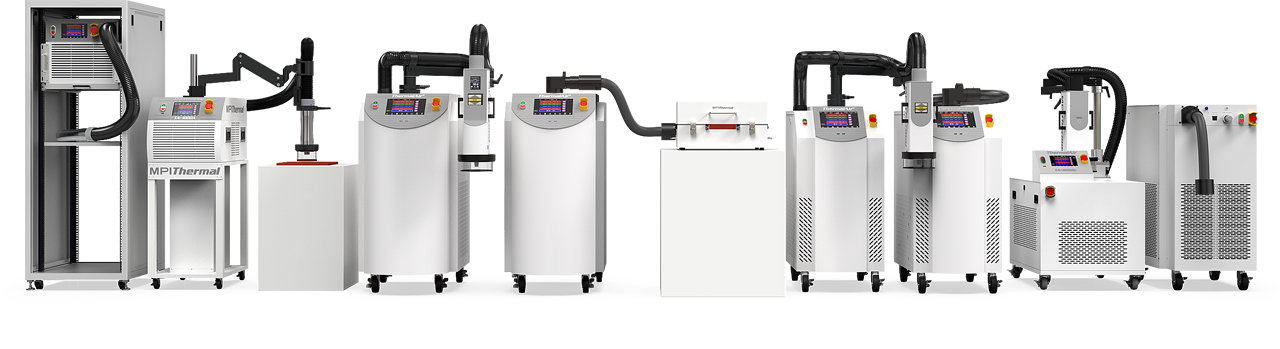
To view the complete product line of MPI Thermal ‘s Temperature Testing Solutions…
-
How MPI Thermal Helps Leading AI Infrastructure Providers Break the Barriers to Hyperscale
AI hyperscalers are no longer just fighting over GPUs—they’re colliding with real‑world limits on energy, water and infrastructure. A single...
-
Thermal Shock vs. Thermal Cycling Test
Thermal Shock vs. Thermal Cycling Test: Understanding the Different Types of Reliability and Accelerated Life Testing Thermal shock tests and...
-
AI Shaping the Future of Optical Transceivers in Telecommunications, Data Centers, and AeroSpace
As artificial intelligence technology advances, it increasingly relies on three major elements: large-scale models that simulate complex processes,...
-
Environmental Temperature Test Challenges In Lidar Devices, Sensors And Radar Technologies
As the demand for autonomous vehicles escalates, the Advanced Driver Assistance Systems market is experiencing rapid growth. In this expansion,...
-
Thermal Test Solutions for Aerospace and Defense Applications: Discover MPI Thermal’s Advanced Technologies
Explore MPI Thermal’s industry-leading thermal solutions, specifically engineered to meet the rigorous demands of aerospace and defense...
-
Diving Deep: Uncovering the Secrets of Semiconductor Reliability Testing in Extreme Environments
In today’s rapidly advancing technological landscape, the reliability of semiconductor components is more crucial than ever before. As the demand...
-
Low Temperature Test Chambers: Extreme Cold Environment Simulation
Low temperature test chambers are critical tools for evaluating product performance and durability in extreme cold environments. These chambers...
-
Small Temperature Test Chambers for Precise and Efficient Rapid Thermal Cycling Test
Small Temperature Test Chambers for Precise and Efficient Rapid Thermal Cycling Test Introduction to Small Temperature Test Chambers Small...
-
Advanced Thermal Test Solutions in Automotive Electronics: An Overview of Environmental Temperature Testing Technologies
In a world where the automotive industry is at the cusp of a transformative phase, rapidly transitioning towards green technologies and a heightened...
-
Unlocking the AI Potential: Advanced Temperature Testing for Critical Electronics
Artificial Intelligence (AI) has rapidly become a driving force in our modern world, revolutionizing industries and enhancing our daily lives in...
-
Advanced Thermal Cycling Test Equipment for PCB Reliability Test
Cutting-Edge Technology for Accurate Thermal Testing. In the evolving landscape of product testing, the use of advanced thermal cycling test...
-
The Indispensable Role of Test Chambers in Battery Testing
The fast-paced world of technology and innovation has rendered battery testing an integral component of product development. Test chambers,...